
Key topics
- The role of diversity, expertise, and collaboration in science.
- Dynamics of scientific innovation and paradigm shifts.
- AI’s influence on knowledge production and evaluation.
Example Projects
- Social complexity of open science.
- Scaling of innovations with urban population size.
- Aggregate effects of LLM contributions to scientific publishing.
- Dilution of expertise in digital knowledge systems.
- AI-driven shifts in scientific publishing and peer review.
Selected Publications
- Duran-Nebreda, S., Bentley, R. A., Valverde, S. (2022). Dilution of expertise in the rise and fall of collective innovation. Humanities & Social Sciences Communications, 9, 365.
- Wang, W., Liu, S., Zhang, W., He, J., Li, C. (2022). The social and cognitive origins of scientific knowledge. Journal of Informetrics, 16(3), 101286.
- He, J., Tian, X., Zhang, W., Wang, W. (2023). Mapping the structure and dynamics of scientific collaboration networks. Scientometrics, 128(5), 2871–2895.
- He, J., Zhang, W., Liu, S., Wang, W. (2024). AI and the changing dynamics of scientific peer review. Research Policy, 53(2), 104821.
- Valverde, S., Vidiella, B., et al. (2025). Structural changes in gene ontology reveal modular and complex representations of biological function. Molecular Biology and Evolution, 42(6), msaf148.
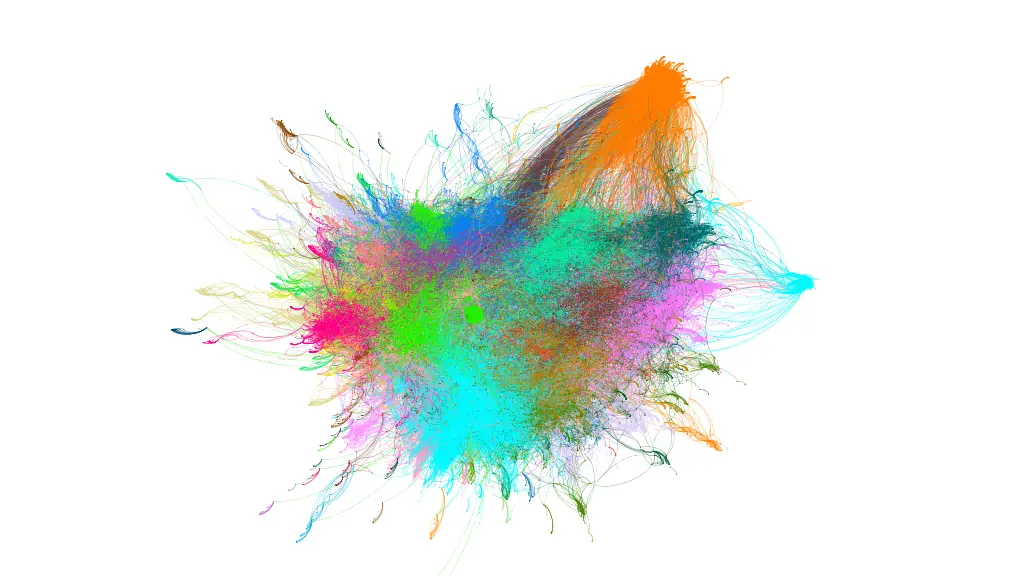
Image courtesy of Ben Horne
Research Themes

Computational Social Science
Analyzing large-scale patterns in human behavior and social systems
Cultural Evolution
Exploring how ideas, practices, and cooperation evolve across time

The Social Complexity of Science
Understanding how knowledge, innovation, and trust in science emerge and spread.
(Image courtesy of Ben Horne)